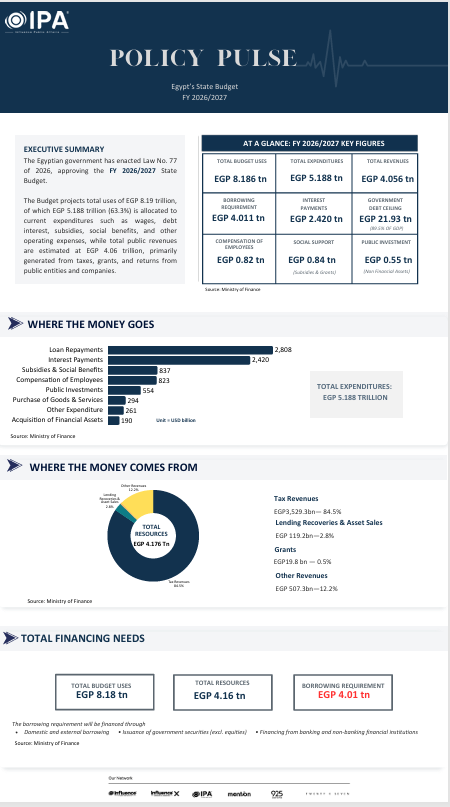
Egypt’s FY 2026/2027 State Budget, approved under Law No. 77 of 2026, sets total budget uses at EGP 8.19 trillion, with EGP 5.188 trillion allocated to expenditures. The largest expenditure items are loan repayments (EGP 2.808tn) and interest payments (EGP 2.420tn), followed by subsidies and social benefits (EGP 837bn), employee compensation (EGP 823bn), and public investment (EGP 554bn). Total revenues are projected at EGP 4.056tn, with tax revenues accounting for the majority at 84.5%.
The budget places debt reduction and fiscal consolidation at the center of the government’s fiscal strategy. The government targets a fiscal deficit of 4.9% of GDP and a gradual reduction in the budget-sector debt-to-GDP ratio from 75.5% in FY2026/27 to 68.4% by FY2029/30. The strategy includes tighter expenditure controls, stronger revenue mobilization, diversified financing instruments—including government securities and sovereign sukuk—and parliamentary oversight of external borrowing.
For businesses and investors, the framework signals continued efforts to improve fiscal sustainability, government financial governance, and the investment environment. Measures include transferring 15% of monthly revenues from special funds and self-financing entities to the State Treasury, enhanced Ministry of Finance oversight, maintaining public-sector salary controls, and expanding financing tools. The government expects debt reduction to gradually support lower inflation and interest rates, stronger competitiveness, greater fiscal resilience, and increased private-sector investment and job creation.